Esquie: Redefining Typography with Experimental Modulation
In a world saturated with standard sans-serifs, finding a typeface that genuinely stops the scroll is a game-changer for any designer. Esquie is that rare experimental modulated font, engineered to push contemporary typography beyond the ordinary. It is not merely a collection of letters; it is a statement of avant-garde design that delivers immediate visual impact through bold geometry and expressive curves.
The Anatomy of a High-Impact Typeface
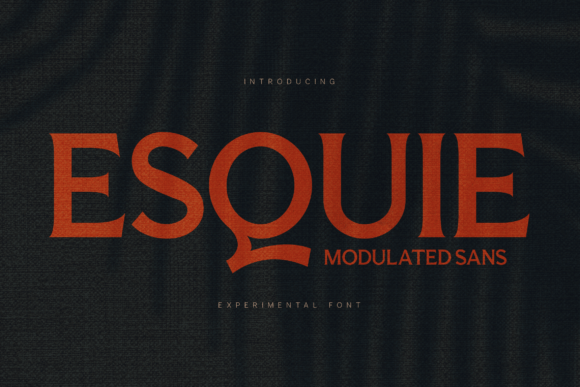
What makes Esquie stand out in a crowded market of creative assets? The answer lies in its construction. This typeface features dramatic variations in stroke weight, a technique known as modulation, which gives the text a sense of movement and architectural depth. The most defining characteristic is its iconic, sweeping “Q” tail—a detail that demands attention and adds a layer of artistic flair rarely seen in professional typography.
Despite its experimental nature, Esquie maintains a crucial balance of clarity. It proves that "unusual" does not have to mean "unreadable." By balancing heavy textures with negative space, this font ensures that your message is communicated with authority, making it a perfect choice for visual hierarchy in complex layouts.
Practical Applications for Modern Designers
Understanding where to deploy a specialized font like Esquie is key to maximizing its potential. Because of its raw yet refined character, it excels in scenarios where first impressions are paramount. Here are several practical applications for integrating this typeface into your workflow:
- Branding and Logo Design: For brands looking to signal innovation and confidence, Esquie serves as a foundational element. It works exceptionally well for fashion branding, tech startups, and architectural firms that want to avoid generic logo design tropes.
- Editorial Layouts and Album Covers: The dynamic nature of the font makes it ideal for editorial design. Whether it is a magazine spread or an album cover, the dramatic curves create a focal point that guides the reader’s eye.
- Digital Marketing and Social Media: In the fast-paced environment of social media graphics and digital marketing, Esquie helps content stand out. Its bold shapes are perfect for headers in web design or UI design elements that require a touch of personality.
- Packaging and Merchandise: When applied to packaging design, the font’s high-contrast nature ensures shelf presence. It translates beautifully onto merchandise, transforming standard text into a piece of graphic design art.
Integrating Esquie into Your Design Workflow
While a bold typeface offers great power, it requires thoughtful implementation to maintain a professional presentation. When using Esquie, consider the surrounding visual elements to ensure compatibility.
Tips for Effective Typography Pairing
To let Esquie shine without overwhelming the viewer, pair it with a neutral, clean sans-serif for body text. This contrast creates a modern aesthetic that is easy to read. Additionally, Esquie pairs best with high-contrast color palettes and heavy textures—think dark backgrounds with bright accents—to emphasize its bold geometry and architectural feel.
Furthermore, consider the scalability of your design. Because Esquie features intricate details and sweeping tails, it is best used for headlines, statements, and large display text rather than small print. Ensuring that your typography is legible across different devices is a fundamental principle of good UX design.
Choosing the right creative resources is about more than just aesthetics; it is about effective communication. By incorporating a typeface like Esquie, you are not just adding a font to your library—you are adopting a tool that elevates visual design and transforms standard projects into sophisticated design inspiration. Thoughtful typography choices bridge the gap between a message and its audience, ensuring that your creative vision is realized with clarity and impact.